
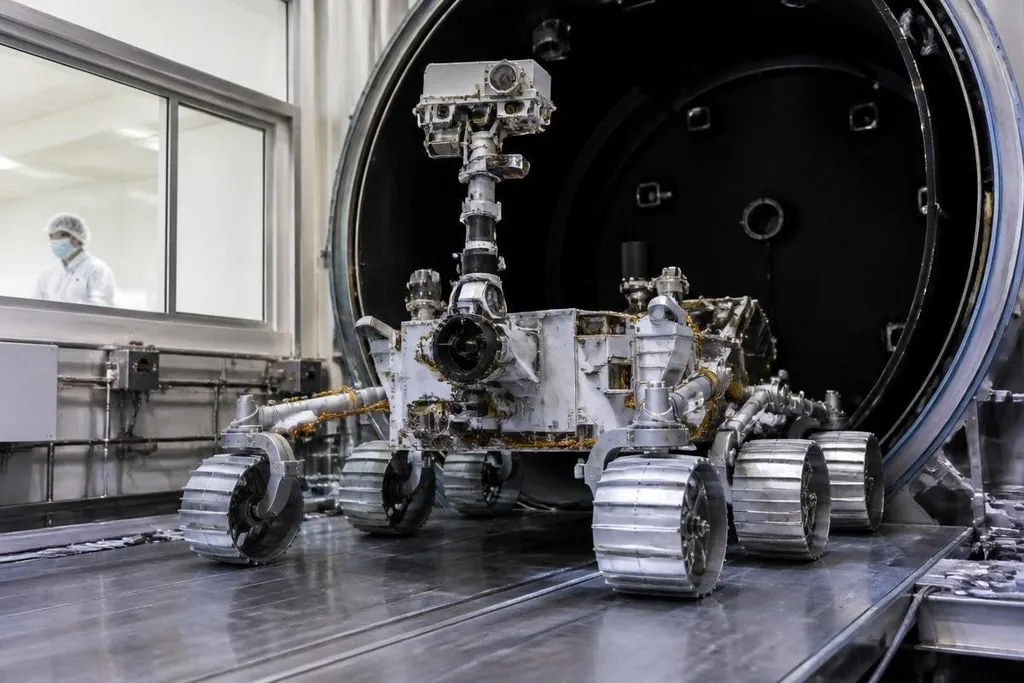
A space robot cannot rely on air, normal lubricants, or a repair crew standing nearby. Its designers must control heat, protect electronics, and choose materials that keep working when pressure drops to almost nothing.
That makes space robotics a hardware problem first. Software matters, but software cannot fix a seal that leaks or a motor lubricant that boils away.
- Heat leaves through radiation, not moving air.
- Materials and lubricants must work without normal pressure.
- A robot may need to handle faults without quick help from Earth.
Vacuum changes how the robot loses heat
On Earth, air carries heat away from motors and electronics. In space, that path disappears. Heat moves through the robot’s frame and leaves from surfaces designed to radiate it.
This changes where engineers place parts. A hot motor needs a path into the structure, while heat-sensitive electronics may need separation, insulation, or a radiator. The robot still has to avoid getting too cold when sunlight is absent.
Paints, coatings, and surface finishes affect this balance. A surface that absorbs sunlight and a surface that releases heat can behave very differently, so the outside of a robot becomes part of its thermal system.
The design has to work during each task. A joint may heat up while moving, then cool when the robot stops. Those changes can alter clearances, sensor readings, and the fit between moving parts.
Motors, seals, and lubricants need different choices
Vacuum can make ordinary oils and greases release gas. That gas may settle on cameras, sensors, or other clean surfaces. Engineers choose space-rated lubricants and materials that release less gas under low pressure.
Motor parts also need protection from wear. A bearing that works well in a sealed Earth machine may need a different material or lubricant in space. The same applies to gears, seals, cable jackets, and adhesives.
Seals face another problem. They must hold pressure where a pressurized enclosure needs it, while also surviving launch vibration and repeated temperature changes. A small leak can affect the whole enclosure if the robot depends on internal pressure.
Some robots avoid pressurized housings altogether. That can reduce sealing work, but exposed parts then need to tolerate vacuum, radiation, dust, and wide temperature changes directly.
A robot that survives the vacuum can still fail when radiation flips a bit in its control system. Robot24 reports on named missions and machines, helping you connect exposed hardware to the electronics that need protection.
Electronics need protection from radiation and faults
Space radiation can disturb electronic circuits and damage some components over time. Designers can add shielding, select parts with space use in mind, and build systems that detect errors instead of trusting every reading.
A robot may check sensor data against other sensors or compare a new reading with the robot’s recent motion. If the values disagree, its software can stop a joint, switch to a safe mode, or wait for a command from Earth.
That local response matters because communication is not always immediate. A robot working far from Earth cannot pause for a person to guide every small movement. Its software needs clear limits for speed, force, temperature, and battery state.
None of this makes the robot independent in the human sense. It means the robot can handle a narrow set of expected problems while waiting for a new command or a software update.
Dust and temperature can end the mission
Vacuum is only one part of the problem. Dust can enter joints, cover optical sensors, or reduce the movement of mechanical parts. On a planetary surface, the robot must also keep its wheels, legs, or tools working against loose ground.
Temperature adds another source of wear. Repeated heating and cooling can stress solder joints, seals, coatings, and structures. Designers test those changes before launch, but a test on Earth cannot reproduce every detail of a remote surface.
The unproven part is often long-term wear. A robot may complete a clean demonstration and still face trouble after months of dust, radiation, and thermal cycling. I’d judge a space robot by its fault handling and service life, not by a short movement demo.
A practical check before trusting a design
Use this checklist when you assess a space robot, a mission plan, or a proposed product:
- Heat path: Find out how motors and electronics send heat to radiating surfaces.
- Material choice: Check whether seals, adhesives, cables, and lubricants suit vacuum use.
- Radiation plan: Look for shielding, error checks, and safe responses to bad sensor data.
- Dust control: Ask which joints, cameras, and tools remain exposed during surface work.
- Fault response: See what the robot does after a stalled motor, lost sensor, or broken link.
- Service life: Look for evidence from thermal-cycle, vibration, vacuum, and long-run tests.
A robot that passes those checks still has to prove itself in the place where repair is hardest. The useful question is no longer whether it can move in space, but how long it can keep moving after the first fault.